Anxiety and fears
- Generalised anxiety disorder
- Panic disorder
- Social anxiety disorder
- Agoraphobia
- Specific phobias
- Obsessive-compulsive disorder
- Anxiety and panic attacks
- Health anxiety (hypochondria)
Practising clinical psychologist and CBT counsellor. Currently training as a psychotherapist in Carl Rogers’ Person-Centred Therapy.

The man who has not passed through the inferno of his passions has never overcome them.
My interest in psychology grew out of my own experience. At 15 I started having panic attacks that doctors couldn’t explain for a long time. That was when I discovered psychology as a way to understand myself and find something steady to hold on to. I went on to study medicine, but within a year I realised that psychology was where I belonged. That journey shaped how I see my work: I know first-hand how much it matters to have someone beside you who accepts you, supports you and helps you find your own inner resources. My aim is to offer a space where you can be yourself, where your symptoms and fears make sense and become the starting point of an important conversation. I believe every difficult chapter in life can be an opportunity for change. My own path has shown me that, and now I’d like to walk alongside you as you find your inner strength, calm and a deeper understanding of yourself. For me, this work is the art of being there for someone: truly listening to what you bring and supporting you on the way to a better life.
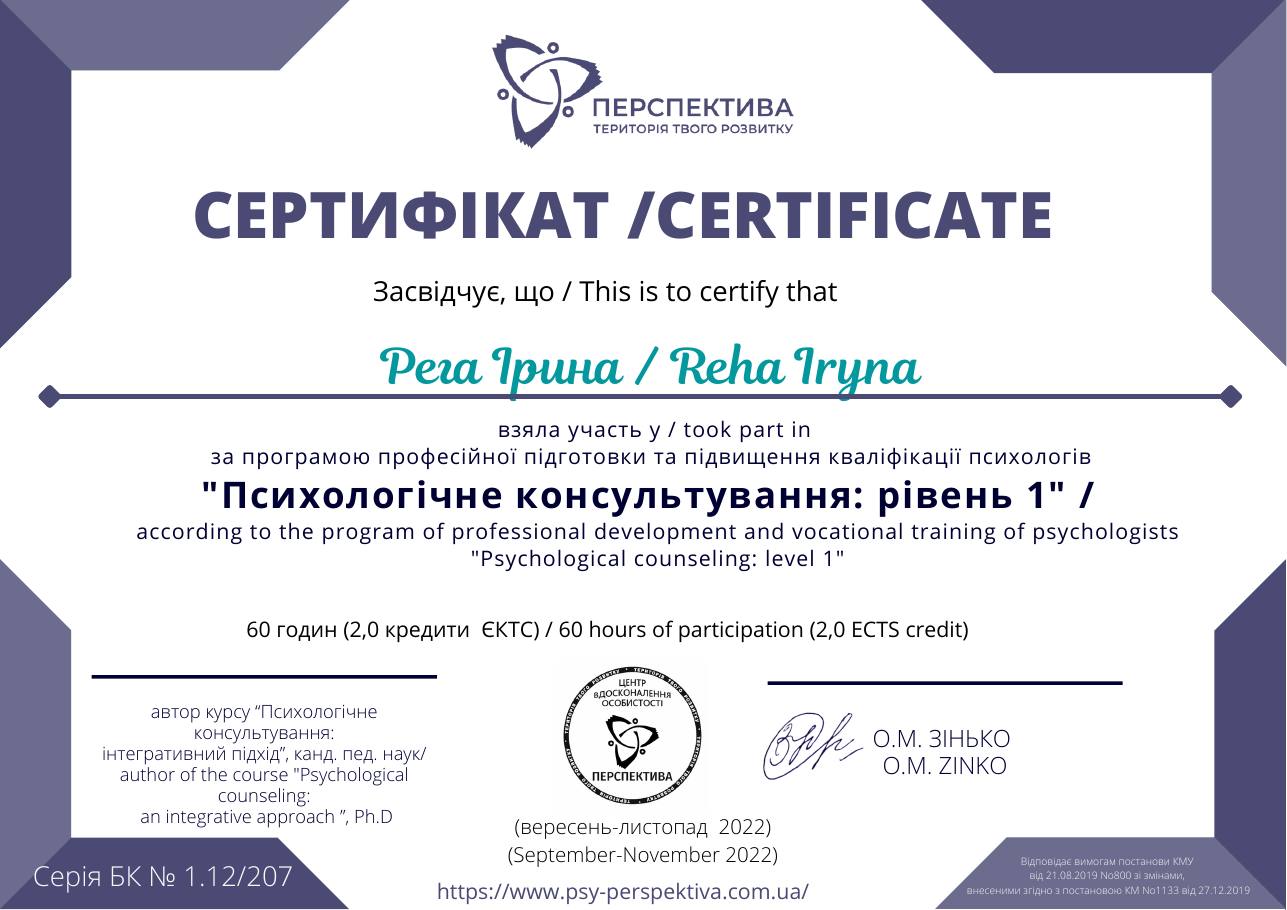
I have been counselling since 2022. I started out as a volunteer, and about four months later I opened my private practice.
In my own therapy I tried a range of approaches (psychoanalysis, CBT, Gestalt therapy, person-centred therapy and others) to find out which one I wanted to practise myself. I chose CBT and, later, person-centred therapy: they felt the most natural to me and taught me a great deal about myself and the way I show up in the world. I wanted to master them.
Where there is a psychiatric diagnosis, I work alongside a psychiatrist.
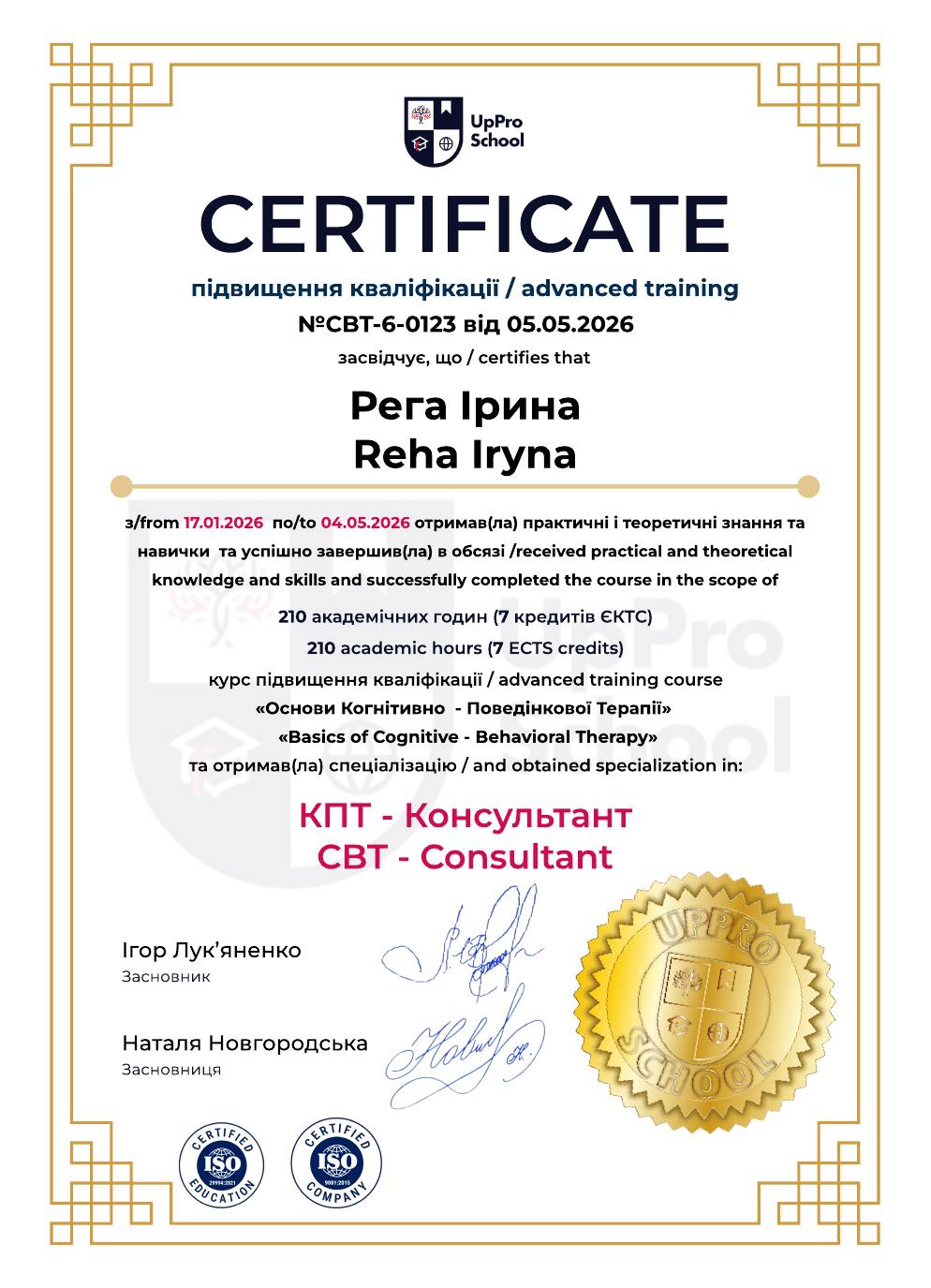
An evidence-based approach that helps you see how your thoughts, emotions and behaviour are connected, and gradually change the patterns that keep anxiety or low mood going. I hold a CBT Counsellor qualification (UpPro School, 210 hours).
Therapy grounded in acceptance, empathy and genuineness, and in trust in your own capacity for change. I have been training in this approach at the Ukrainian Psychotherapeutic University since 2026.
When we meet in person, we can draw and work with images and materials as part of the session.
Working with the images on the cards helps you talk about what is hard to put into words and see your situation from a new angle.
I work within CBT, particularly with anxiety and depressive disorders, in collaboration with a psychiatrist. When it comes to disorders, structure and proven protocols really matter, so CBT remains the foundation of my work.
But people come with different needs: some are dealing with a disorder, others want to understand themselves better, and some prefer a gentler, less structured pace. That’s why I aim to strike a balance between the two approaches.
Together, they let me tailor the work to each person.
Five steps from your first message to deeper work. Select a step to see what it involves.
A few minutes
I’ll send you the address for in-person sessions once you’ve booked. In Uzhhorod, in-person sessions are available by prior arrangement.
First session, 60 minutes
Feeling nervous before a first session is completely natural, and that threshold is exactly where change begins. Whatever you want to say is welcome here.
At the start of our work
You have the right to end therapy at any time, or to raise anything you’d like to change.
Sessions two and three
When we meet in person, we can draw and work with images and materials during the session.
Once your goals are clear
Where there is a psychiatric diagnosis, I work alongside a psychiatrist: she takes care of medication, and I lead the therapeutic work.
I’m in regular supervision, take part in peer intervision with colleagues and have my own therapy. I see this as essential for growing as a professional.
I regularly discuss my work with an experienced supervisor. It helps me see the bigger picture, spot my own blind spots and find the best way forward for each client. Anything relating to you is discussed anonymously.
I meet with colleagues to work through complex cases together and share experience and approaches. Their perspective helps me look at a situation from different angles.
I have my own therapy to understand myself better and keep my own experiences out of our sessions. It helps me stay fully present with you and look after my own wellbeing.
Alongside my practice, I’m involved in research: I present at academic conferences and write abstracts and articles.
My research looks at how emotional intelligence relates to depression in early adulthood (ages 20–40). The participants were 50 inpatients of the psychiatric ward at the Regional Psychiatric Care Facility in Berehove: people already receiving professional help, most of whom had moderate or severe depressive symptoms.
The key finding was the link between skills and wellbeing: the better someone can actually notice their emotions and manage them, the fewer depressive symptoms they have. This link was strong and statistically significant. Knowing about emotions, without the skills to regulate them, offered no protection against depression.
That’s why, in my work with clients, I focus on building practical emotional self-regulation skills. For people with severe depression, this work is part of comprehensive care alongside psychotherapy and, where needed, psychiatric treatment.
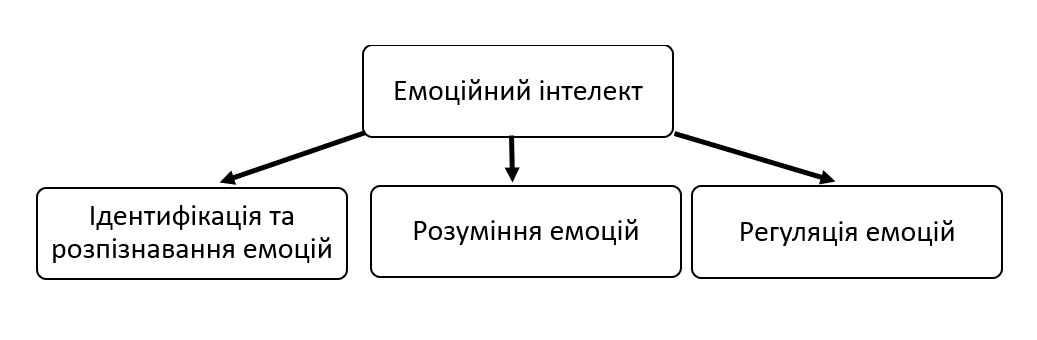 Fig. 1.1. Structure of emotional intelligence
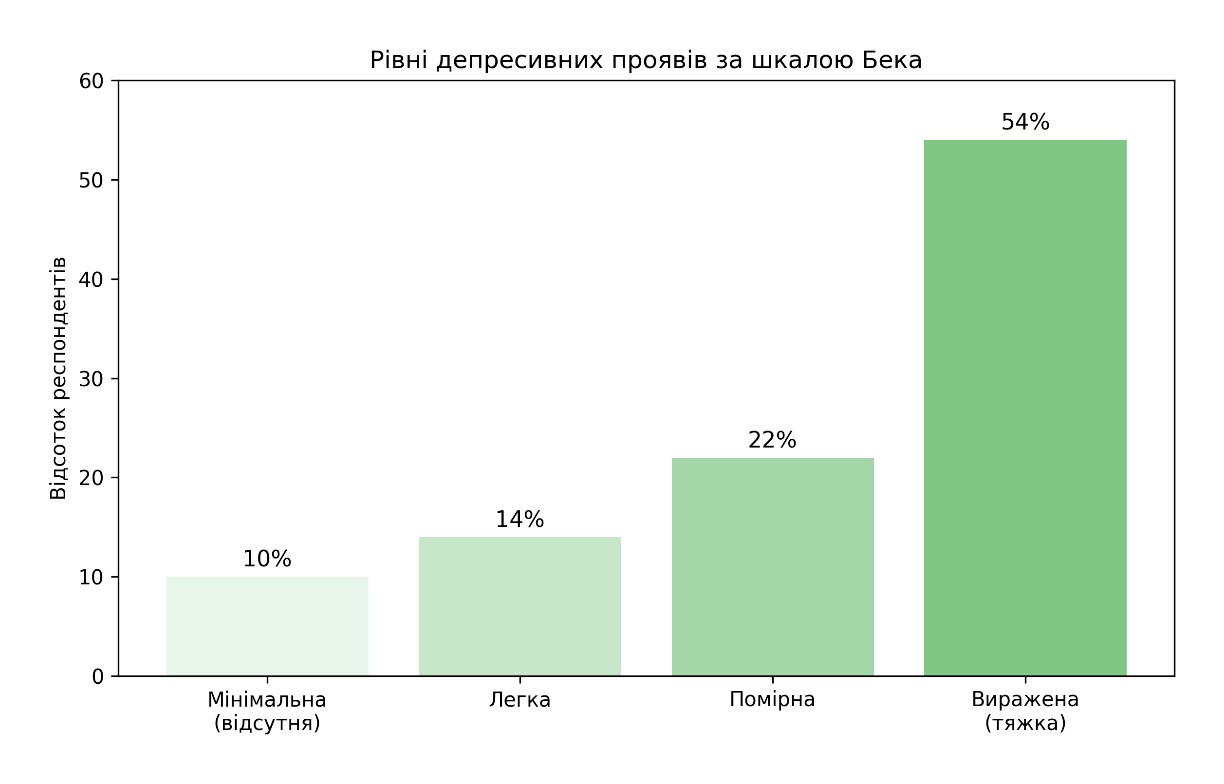 Fig. 2.1. Respondents by level of depressive symptoms (Beck Depression Inventory)
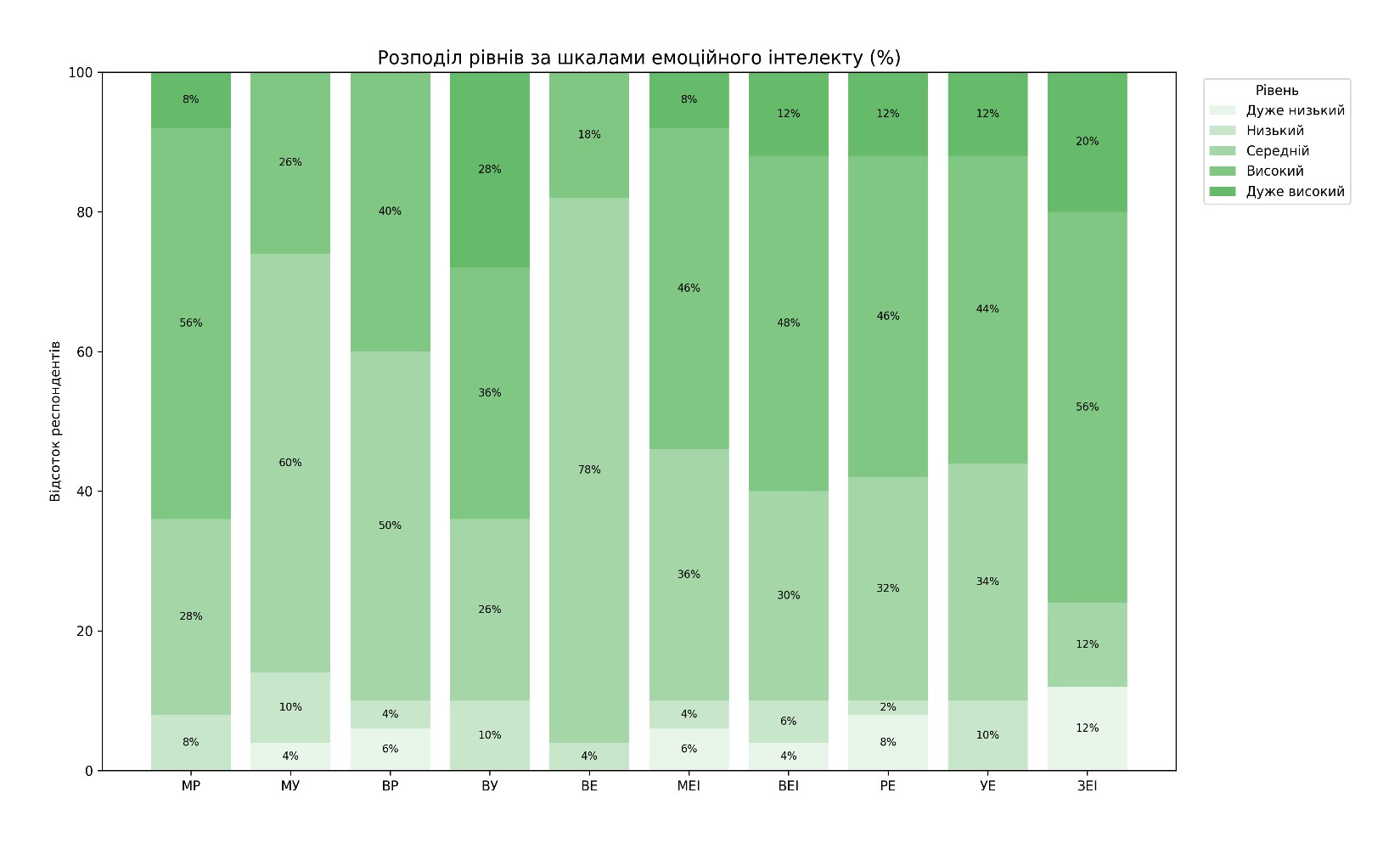 Fig. 2.2. Respondents by level of emotional intelligence indicators, EmIn questionnaire (adapted by O. S. Veritova)
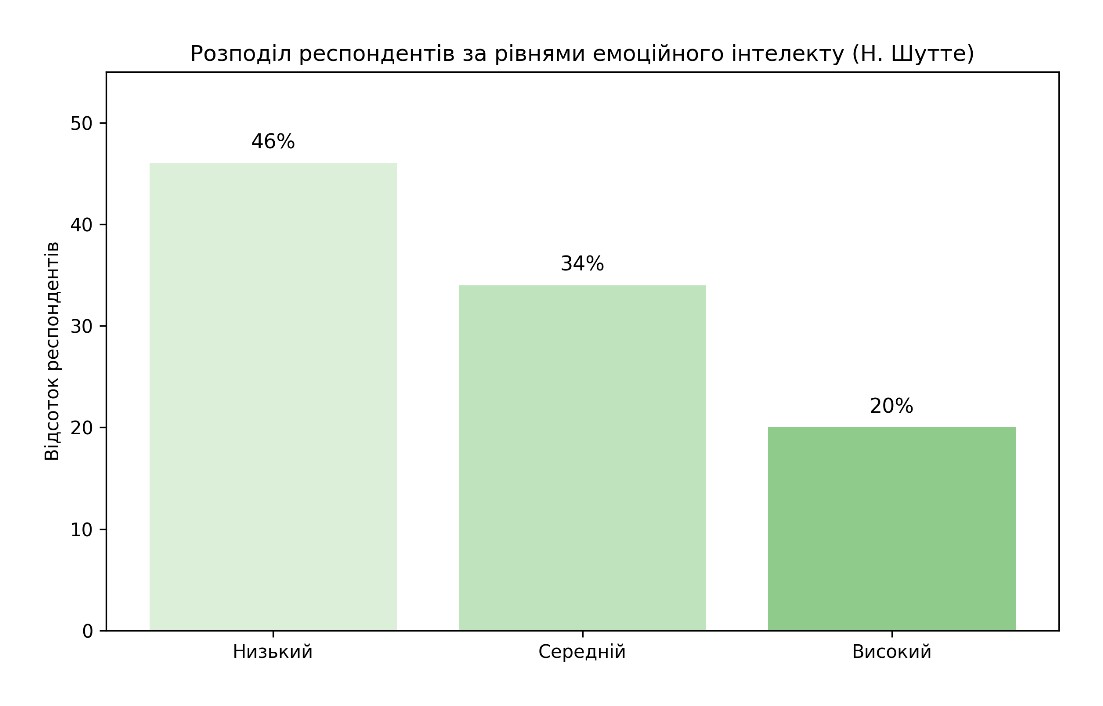 Fig. 2.3. Respondents by level of emotional intelligence, Schutte scale
XIV All-Ukrainian Scientific and Practical Conference “Youth in Modern Psychology”, Sumy State Pedagogical University. Co-authored with my academic supervisor, Prof. L. P. Mishchykha, Doctor of Psychology.
Academic supervisor: L. P. Mishchykha. Student Scientific Studies: Psychology, Philosophy: a collection of student research papers. Ivano-Frankivsk: Vasyl Stefanyk Carpathian National University, 2026. Issue 4, pp. 319–324. Published in Ukrainian.
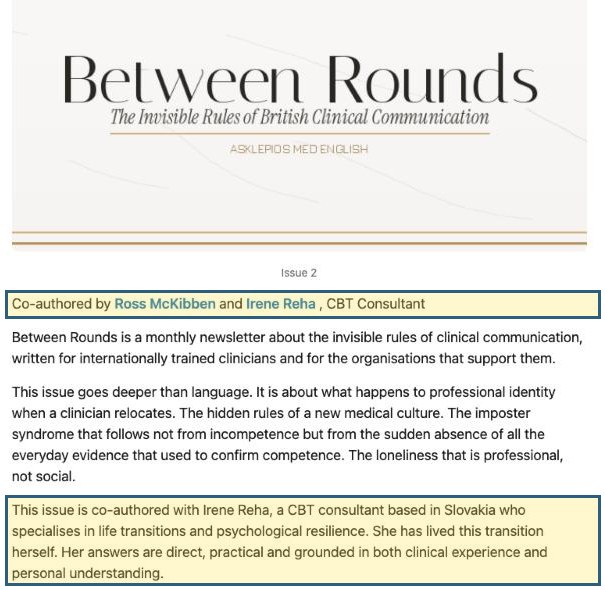
Between Rounds, Issue 2, Asklepios Med English, LinkedIn. Co-authored with Ross McKibben. The article explores professional identity after moving to another country: the unwritten rules of a new professional culture, impostor syndrome and professional isolation. Drawing on my own experience of emigration, I share the CBT tools that help people adapt.
Read the article on LinkedInStill have a question? Get in touch.
Caring for your mental health is the foundation of a good life.
At the first session we get to know each other and talk about what brings you to therapy, and you can take your time to sense whether you feel comfortable working with me. We start building trust and agree on the direction our work will take.
In the second and third sessions we keep exploring what’s on your mind. I ask questions, look into your situation and note what’s important so I understand it better. Where helpful, I draw on CBT and art therapy techniques. When we meet in person, we can draw and work with images and materials during the session.
Once your goals are clear (this takes a different amount of time for everyone), we move on to working with deeper experiences.
Sessions last 60 or 90 minutes.
Stepping into the unknown is never easy. Uncertainty is scary, because the mind needs inner resources to adapt to something new. It’s a completely normal reaction.
Feeling nervous before a first session is natural, and that threshold is exactly where change begins. The only way to find out whether a therapist and a format are right for you is to try, so give yourself that chance.
Whatever you want to say is welcome here. It’s just you and your story, and it deserves to be heard.
Psychological discomfort has a direct impact on your quality of life. It may be worth reaching out if you notice any of the following:
Anything that has been causing you discomfort for a long time is a good reason to seek professional support. How you feel matters. You don’t need to wait for a “breaking point”: getting support early helps you stay resilient. Reaching out for help is a way of taking responsibility for your own life.
A psychologist holds a degree in psychology and provides psychological assessment, counselling and therapeutic interventions, but does not prescribe medication.
A psychiatrist is a medical doctor who works with mental health conditions and can prescribe medication to improve a patient’s condition.
A psychotherapist sits somewhere in between and is trained in in-depth, longer-term therapeutic work. This can be a psychologist with additional specialist training in a particular type of psychotherapy, or a psychiatrist with additional training in psychotherapy.
I am a psychologist and CBT counsellor. I am currently training as a psychotherapist in Carl Rogers’ Person-Centred Therapy at the Ukrainian Psychotherapeutic University.
If you’re not sure, you can start with a psychologist. At the first session we’ll look at how you’re doing together, and if you need medical support, I’ll recommend seeing a psychiatrist. Where there is a psychiatric diagnosis, I work alongside a psychiatrist: she takes care of medication, and I lead the therapeutic work.
Online sessions take place by video call (Google Meet or Zoom), wherever is convenient for you.
In-person sessions take place in a therapy room.
Choose whichever option feels most comfortable and safe for you. I work online and in person in Bratislava; in Uzhhorod, in-person sessions are available by prior arrangement. I’ll send you the address once you’ve booked.
I work with adults only, on a one-to-one basis. Sessions are held in Ukrainian.
Therapy is based on a therapy contract: an agreement about the goals of our work, how often we meet and what each of us is responsible for. We discuss it at the start so that the process is clear and transparent for you.
Before we begin, I give you clear information about how I work: the methods I use, how sessions run, how I protect your confidentiality and what its limits are. You’re free to ask any questions, and you agree to the work voluntarily. You also have the right to end therapy at any time or to raise anything you’d like to change.
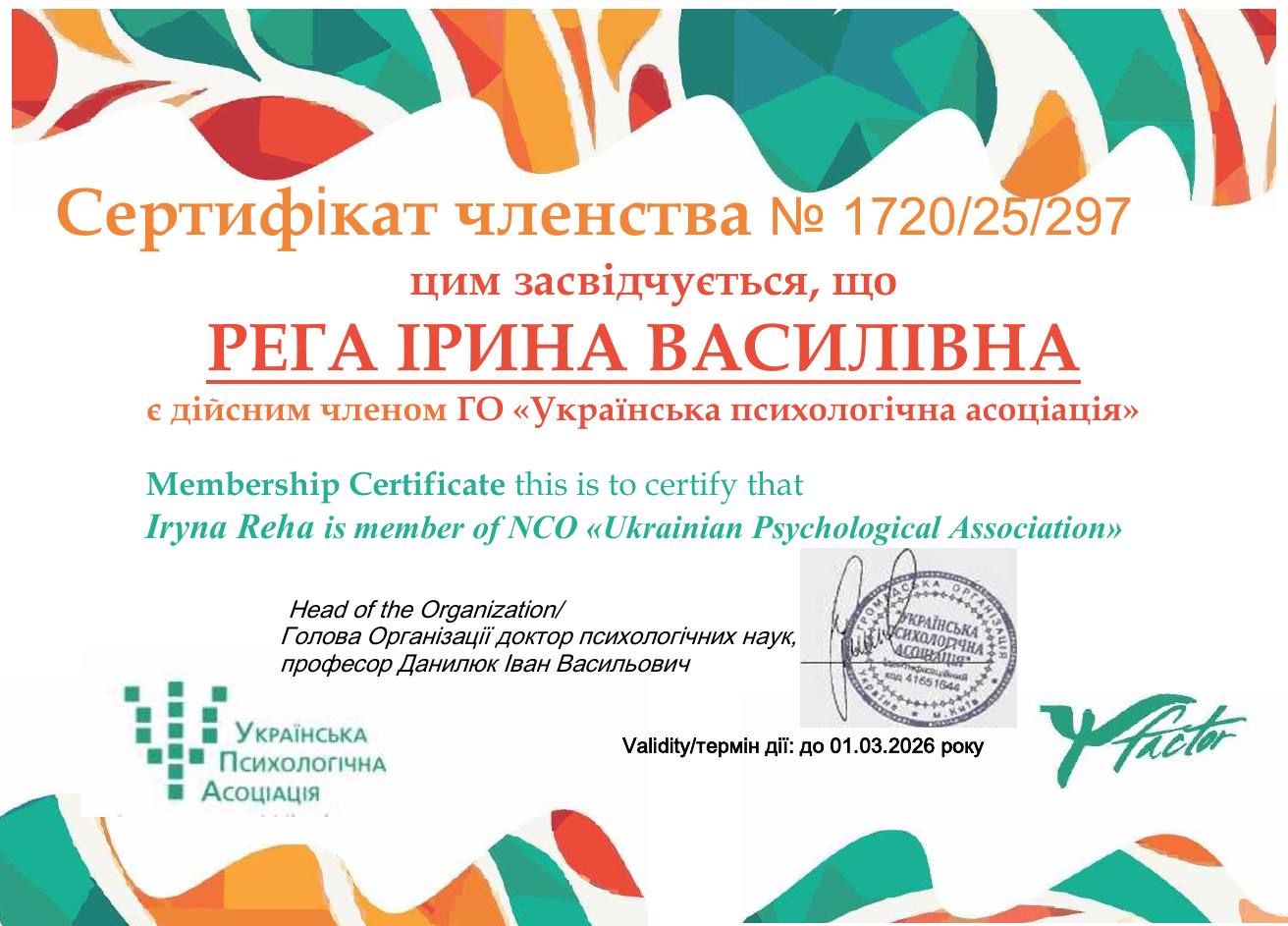
Our profession has clear ethical standards that protect clients’ interests. I follow professional ethics and the principles of confidentiality, so everything you share in a session stays between us. I explain the limits of confidentiality at our first session. I’m a member of the National Psychological Association and the Ukrainian Psychological Association, and I’m in regular supervision, intervision and personal therapy.
If you have any questions about how I work or about ethical standards, I’m happy to explain.
It depends on what you’re looking for. Trust your own sense of safety, and look at the therapist’s professional background: their training, approach, membership of professional associations and supervision. Don’t hesitate to try working with different specialists until you find the right fit.
Message me on WhatsApp, on Telegram (@iiireneee13) or via Instagram Direct (@irrene.psy), and I’ll let you know my fees and available times.
If you’re feeling anxious right now, try breathing slowly along with the circle: breathe in, pause briefly, then breathe out slowly. A longer exhale helps your body calm down. Three rounds take less than a minute.
If the exercise feels uncomfortable, just breathe at your own pace.
Done. How do you feel now? Press “Start breathing” and follow the circle.
Sometimes you just feel “bad” inside, and it’s hard to say what exactly is going on. When we name a feeling precisely, it loses some of its intensity, and it becomes easier to see what we really need. Choose what feels closest, then find a more precise word.
There are no wrong answers here, and only you can see yours.
1. What feels closest right now?
2. Which word fits best?
What I feel right now: .
Anxiety is often about a need for safety and predictability. What’s one small thing that could help you feel a little steadier right now?
Naming a feeling is already a step towards coping with it. If a feeling keeps coming back, we can explore it together in a session.
2. Which word fits best?
What I feel right now: .
Sadness comes when we lose something important, or when things turn out differently than we hoped. It needs time, warmth and someone by your side.
Naming a feeling is already a step towards coping with it. If a feeling keeps coming back, we can explore it together in a session.
2. Which word fits best?
What I feel right now: .
Anger signals that your boundaries have been crossed or that something is unfair. What might it be trying to tell you?
Naming a feeling is already a step towards coping with it. If a feeling keeps coming back, we can explore it together in a session.
2. Which word fits best?
What I feel right now: .
Shame wants to hide, but what it really needs is acceptance. What would you say to someone you love if they were in your place?
Naming a feeling is already a step towards coping with it. If a feeling keeps coming back, we can explore it together in a session.
2. Which word fits best?
What I feel right now: .
Tiredness is a sign that you’re running low. Could you let yourself do a little less today?
Naming a feeling is already a step towards coping with it. If a feeling keeps coming back, we can explore it together in a session.
2. Which word fits best?
What I feel right now: .
Pleasant feelings are worth noticing too. Stay with this feeling for a few breaths.
Naming a feeling is already a step towards coping with it. If a feeling keeps coming back, we can explore it together in a session.
Sessions are held in Ukrainian. For fees and availability, please send me a message on WhatsApp, Telegram or Instagram.
Google Meet or Zoom
📍 Bratislava (Slovakia)
📍 Uzhhorod (Ukraine) by prior arrangement